Showing posts with label Astrophotos—Galaxies. Show all posts

Sunday, 17 November 2013

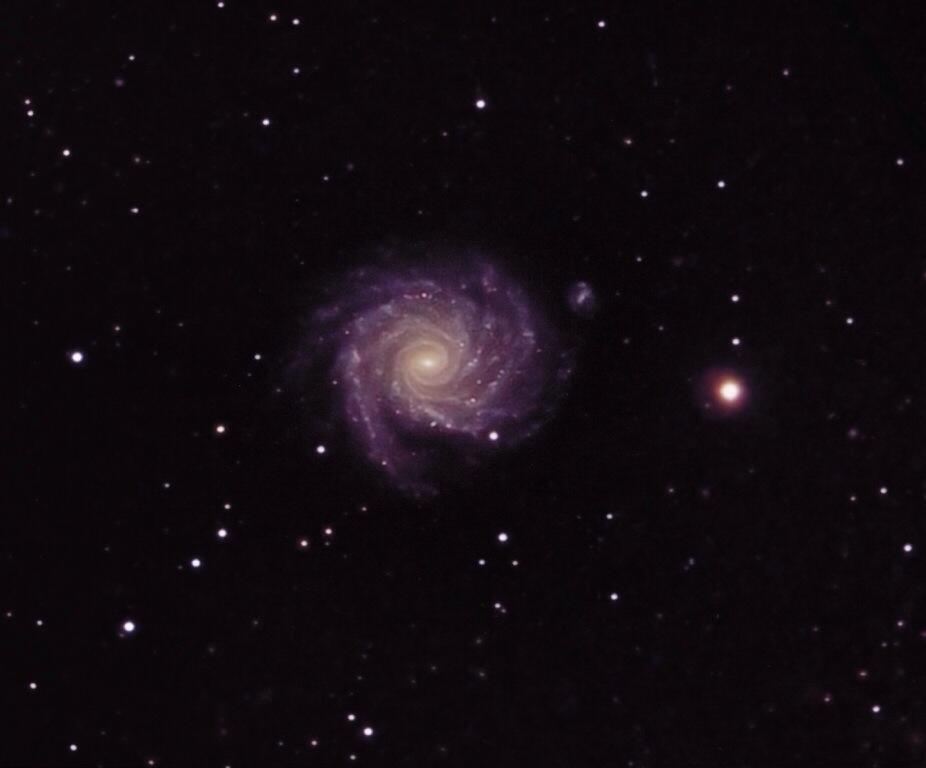
Beautiful spiral galaxy duo from Jonathan Powles


Jonathan Powles has been having a great run of photos lately. Here are two lovely spiral galaxies he posted.

Above:
NGC 1232, an impressive spiral galaxy in Eridanus. A total of 200 mins exposure last night [6 November].
Below:

Saturday, 9 November 2013

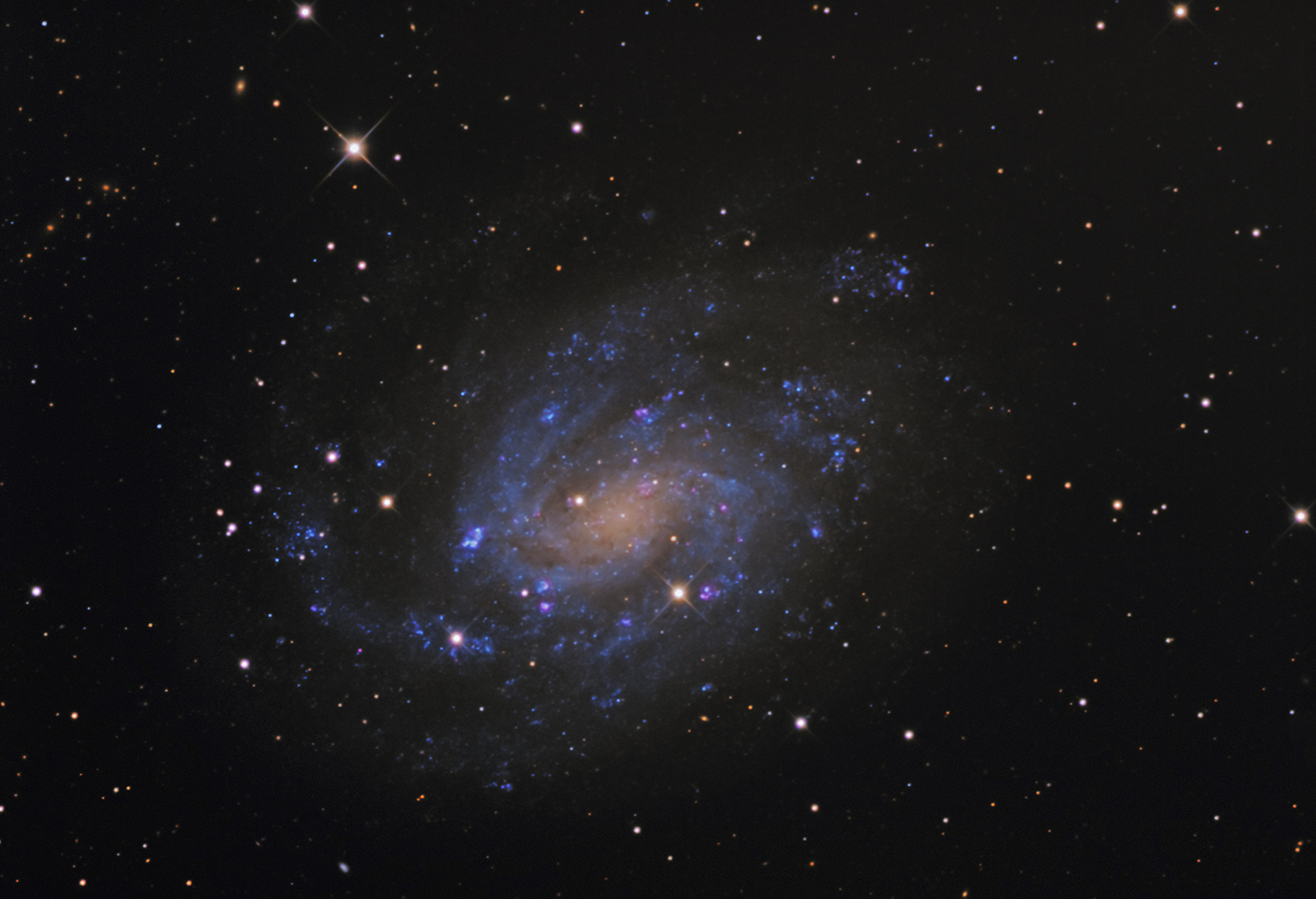
Jonathan Powles hits a purple patch with NGC 1365

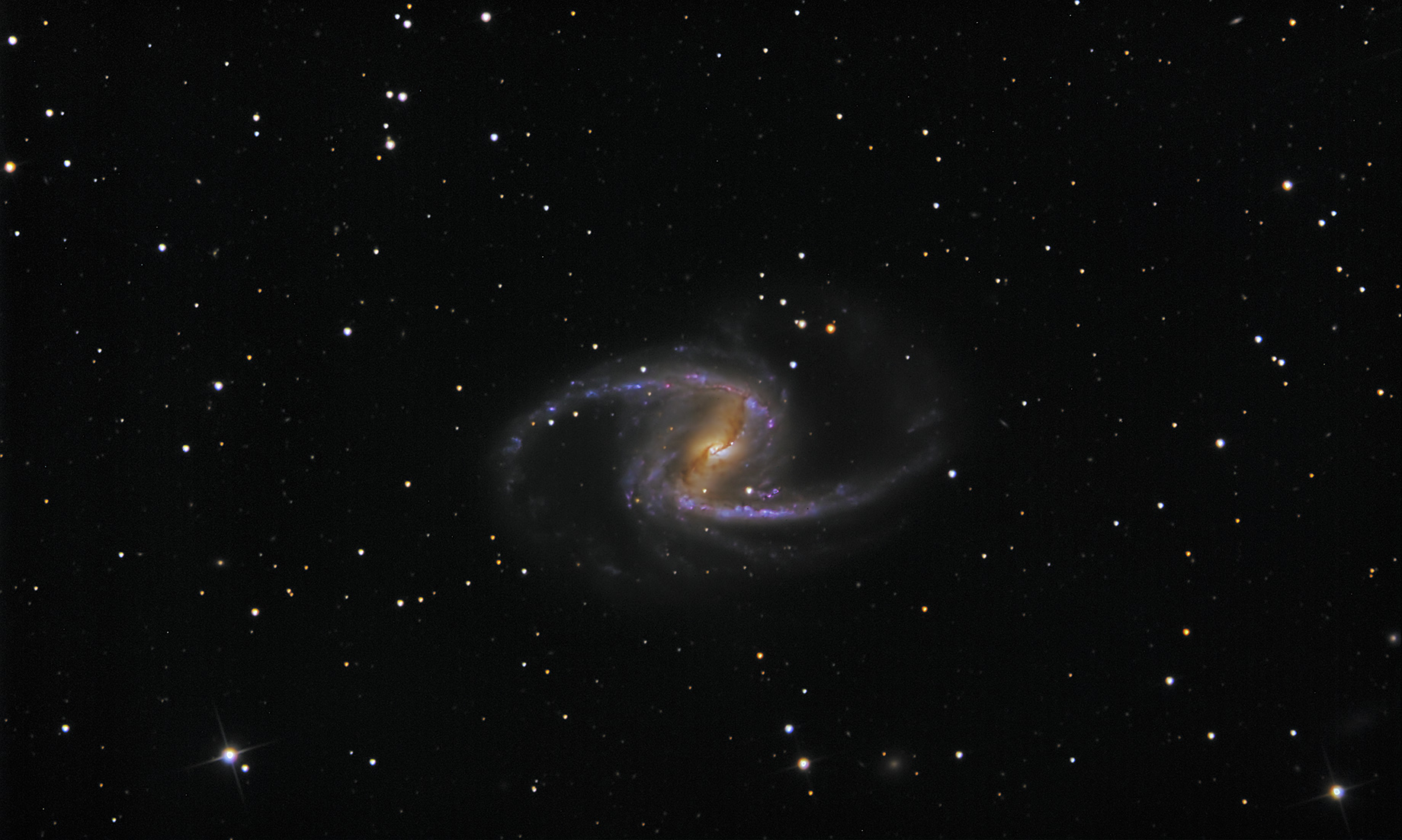
NGC 1365


The Great Barred Spiral Galaxy NGC 1365 is a popular target in our southern skies right now. Jonathan Powles shared this great photo he took over a couple of nights. He explains:
I'm feeling pretty chuffed. A couple of months ago I got a mono CCD camera, which didn't work properly straight out of the box and had to be sent back to Atik to replace the USB port. It came back, and I'm delighted. As well as getting variable star observations accurate to within 0.05 mag, and some nice spectra (my main purpose in getting the camera) I have also got some nice data on some deep sky objects.

Thursday, 7 November 2013

Different views of NGC 253, the Sculptor Galaxy, by Vello Tabur


The Sculptor Galaxy is about 11.4 million light years away, and features a supermassive black hole in its centre of some 5 million solar masses! Vello describes the two shots:

Wednesday, 6 November 2013

Great Barred Spiral Galaxy looking beautiful, by Steve Crouch


This is lovely shot by Steve Crouch of the Great Barred Spiral Galaxy NGC 1365, which is about 56 million light years away. The yellow central section clearly shows the bar from which it gained its name.

Steve explains why this was a fortuitous shot:

Friday, 1 November 2013

This is what 3.5 hours of shooting from the 'burbs gets you…


M74 is a spiral galaxy of about 100 billion stars. It's face-on to us in the constellation of Pisces, and about 32 million light years away.

But when you're shooting from the light-polluted suburbs of Canberra, it takes a lot of time to get a good exposure after taking out all the "wrong" light.

Check this trio of space gorgeousness from Chris Marklew

Carina Nebula NGC3372
Carina Nebula NGC 3372


Chris Marklew sent through this collection of three beauties, with this unassuming introduction:
I have reprocessed some images from earlier in the year after learning a bit more about processing, the comet was by far the hardest to do without star trails
Time well spent it would seem!

Nice galaxy NGC 55 in the Sculptor constellation by Peter Treyde

NGC 55 is an edge-on barred spiral galaxy about seven million light years away. Peter Treyde took this nice photo in early October from his home east of Queanbeyan, in poor seeing. His description:
It is composed of about 9hrs of 30 min subs, RGB. Unfortunately the stars were twinkling and the seeing was poor on two of the three nights I imaged. I think the FWHM values were around 3arc sec on most of the subs.
It is an RGB image binned 1x1. No luminance.Telescope is an Officina Stellare RC360Mount is a Paramount MECamera, filter wheel filters and focuser FLI 16803, CFW4-5, AtlasLodestar Auto-guider (off axis)Pyxis 3” rotatorExposures: 6xR 6xG 5xB (30 min subs at -35C)Software: TheSkyX, Maxim DL, CCD inspector, FWHM Monitor, FocusMax, PixInsight.
Yes, the hobby of astrophotography involves a lot of hours outside, and probably just as many in front of the computer!

Friday, 25 October 2013

Lovely Sculptor Galaxy, by Mark Nickols


Mark Nickols has his scope back from the shop and is getting back into the swing of things with this great catch of NGC 253, the Sculptor Galaxy, from his suburban back yard.

Mark's description:
I collected my scope last Monday and duly paid the repair bill (there was play in the DEC drive) and it has been frustrating waiting to try it out, what with smoke and cloud, and last night was the first opportunity. I'm not entirely happy with this image of the Sculptor Galaxy (NGC 253) but in a recent post I think Steve Crouch said that "people seem to prefer it" or words to that effect but I couldn't recall anyone posting it recently so here 'tis. 
The point of this little exercise was to check the tracking of the scope using guiding software (PHD). There are still issues to deal with but the scope tracked this little beasty from the first exposure at 1015 to the last at 0217 with virtually no movement in the image from frame to frame, so that's a big thumbs up for the repairs.
Now on to issues with tuning the guiding software (where I can now at least see that changes I make to parameters are having some [reproducable] effect).
 
Telescope: LX200-ACF
Camera: SBIG STF8300c
No filters.
16 x 5 min exposures, stacked

UPDATE 28/10/2013: Image replaced with reprocessed version.

Wednesday, 16 October 2013

NGC 300—another cracker galaxy from Steve Crouch


Steve explains:
This is an example of a galaxy that really needs a dark sky and my sky is anything but dark these days.  The seeing was generally pretty ordinary too but I hope the resultant image (took many hours to process) is acceptable. 
I incorporated some techniques from the new book by Rob Gendler: “Lessons from the Masters—Current concepts in Astronomical Image Processing”, which I would thoroughly recommend.
Catalogue and alternative designations  NGC 300
Type   Spiral Galaxy 
Position  01 14.4, -73 17
Constellation  Sculptor
Camera and Telescope  STXL11002 and 36.8 cm Ritchey Chretien
Focal Ratio  F9
Exposure Details  LRGB 255:130:90:110 Luminance 1x1, Colours 2x2.  Baader filters.   
Description
NGC 300 is a large (21.9' x 15.5') fairly low surface brightness spiral galaxy once thought to be part of the Sculptor group but now thought to be a foreground object. In general shape it somewhat resembles M33 in the northern hemisphere. The apparent magnitude is 9.1.


Monday, 30 September 2013

Everyone's heard of NGC 253—this is NGC 254

http://members.pcug.org.au/~stevec/ngc254_STXL11002_RC_LRGB.jpg
Steve Crouch turns his eye to a less-often imaged galaxy. And captures at least 10 other galaxies into the bargain! He explains:
Thought I would try something not often imaged.  It’s obvious from this image why people prefer NGC 253.
Catalogue and alternative designations NGC 254
Type Galaxy
Position   00 47.8, -31 25
Constellation Sculptor
Camera and Telescope STXL11002 and 36.8 cm Ritchey Chretien 
Focal Ratio F9Exposure
Details LRGB 285:70:60:60 Luminance 1x1, Colours 2x2DescriptionThis is a SB0 type magnitude 12 galaxy roughly 2.6' x1.7' in size.  It is almost exactly due north of the much better known NGC 253.
Thursday, 5 September 2013

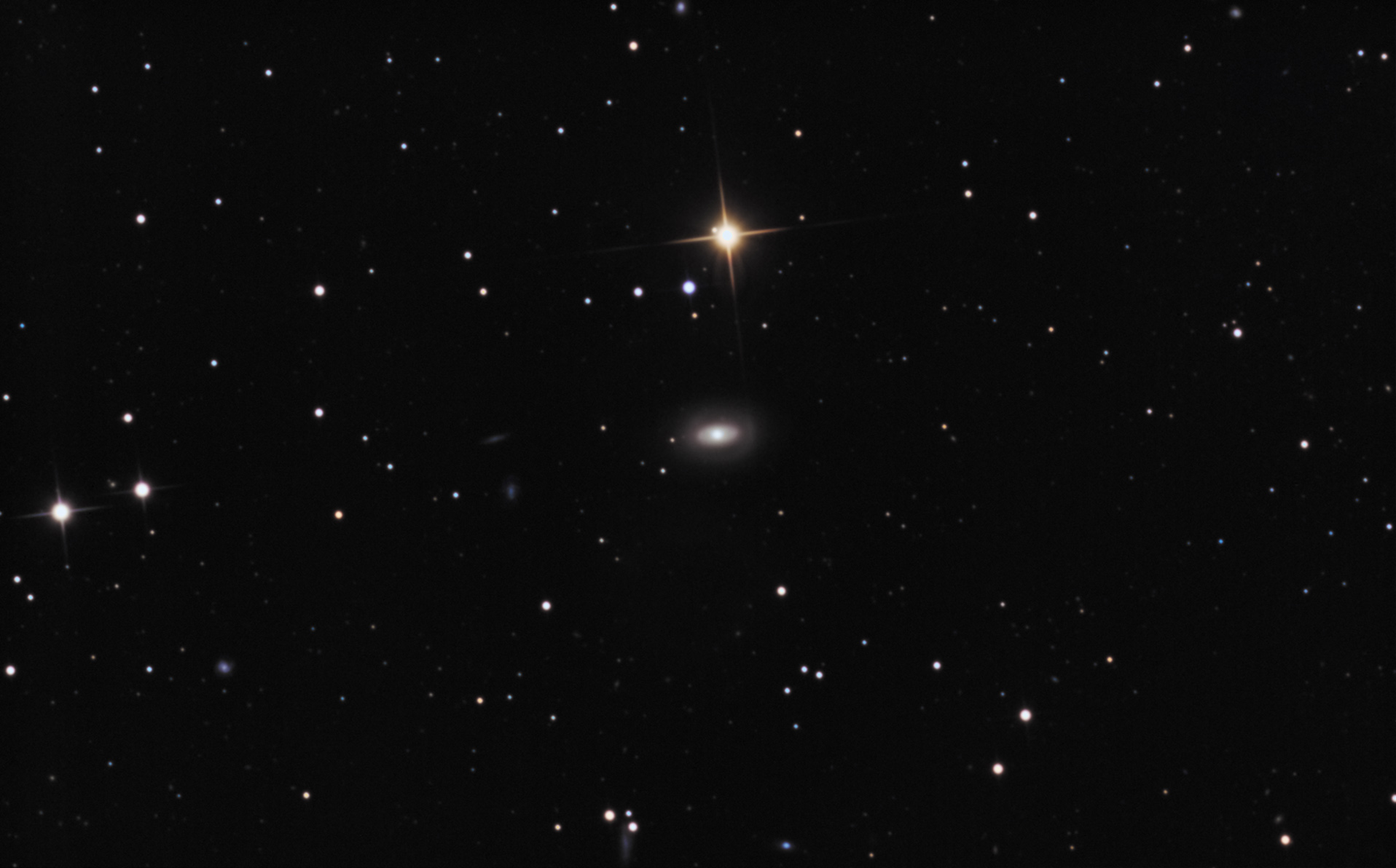
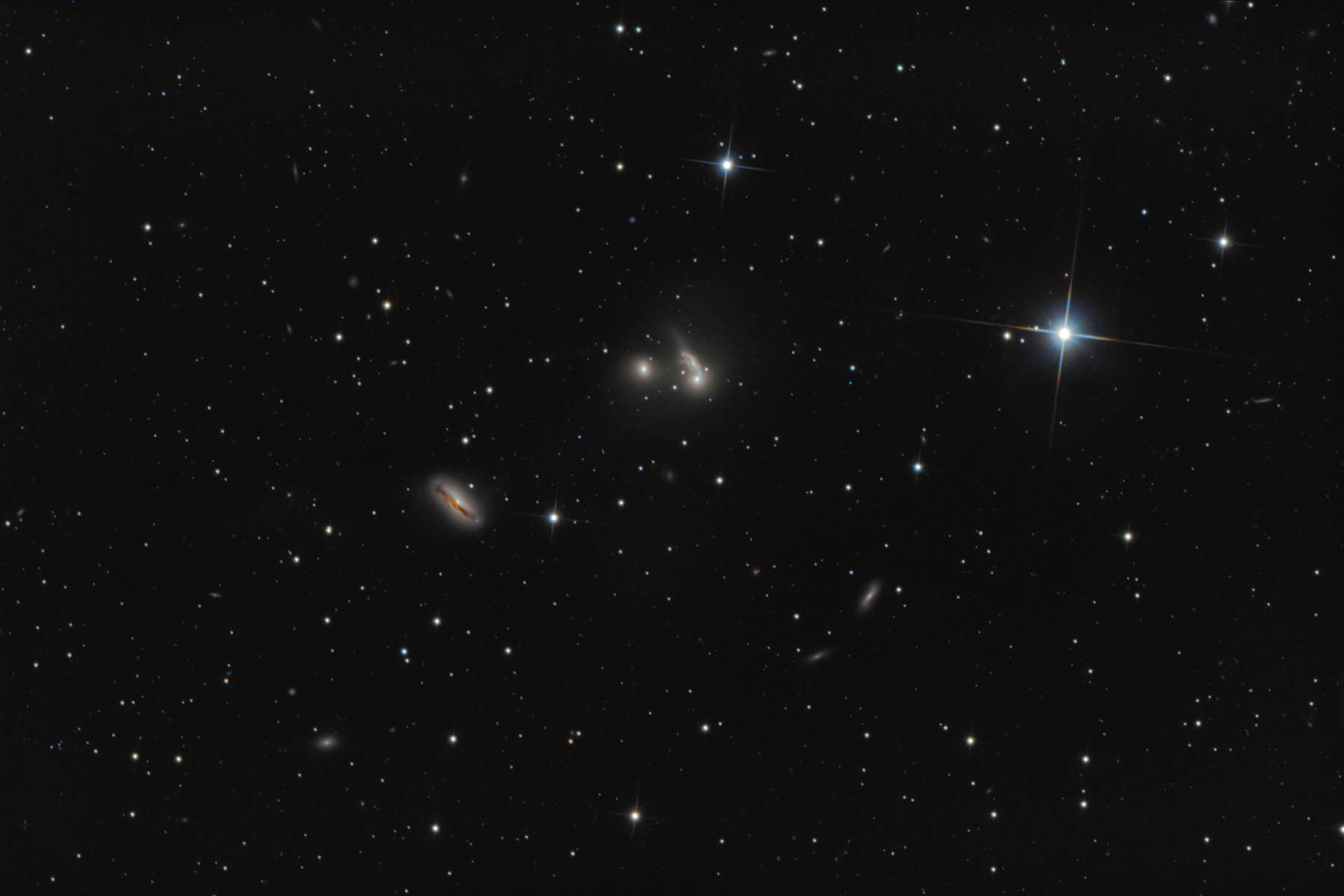
Stunning galaxy group NGC 7172 by Steve Crouch


Steve Crouch has come up with this pearler of a galaxy group, with NGC 7172 showing beautiful dust lanes and colour. Look closely and you'll see at least 40 galaxies in this single photo! With an average of 100 billion stars per galaxy, that's a heck of a lot of stars...
Catalogue and alternative designations NGC 7172 galaxy group, Hickson 90
Type  Compact galaxy group 
Position 22 02.0, -31 52
Constellation Piscis Austrinus
Camera and Telescope STXL11002 and 36.8 cm Ritchey Chretien Focal Ratio F9
Exposure Details LRGB 225:45:40:40 Luminance binned 1x1, Colours 2x2 with Baader filters
Description
This little group of galaxies doesn't seem to be imaged much.  NGC 7172 is lower left of centre (with the dust lane). NGC 7173, 7174 and 7176 form the interacting group just above centre.  ESO 466-46 and 466-47 are to the lower right.  The bright star is magnitude 6.7.
Galaxies range in size from 10 million stars up to 100 trillion! And there are some 170 billion galaxies in the known observable universe... Incomprehensible numbers.

Monday, 17 June 2013

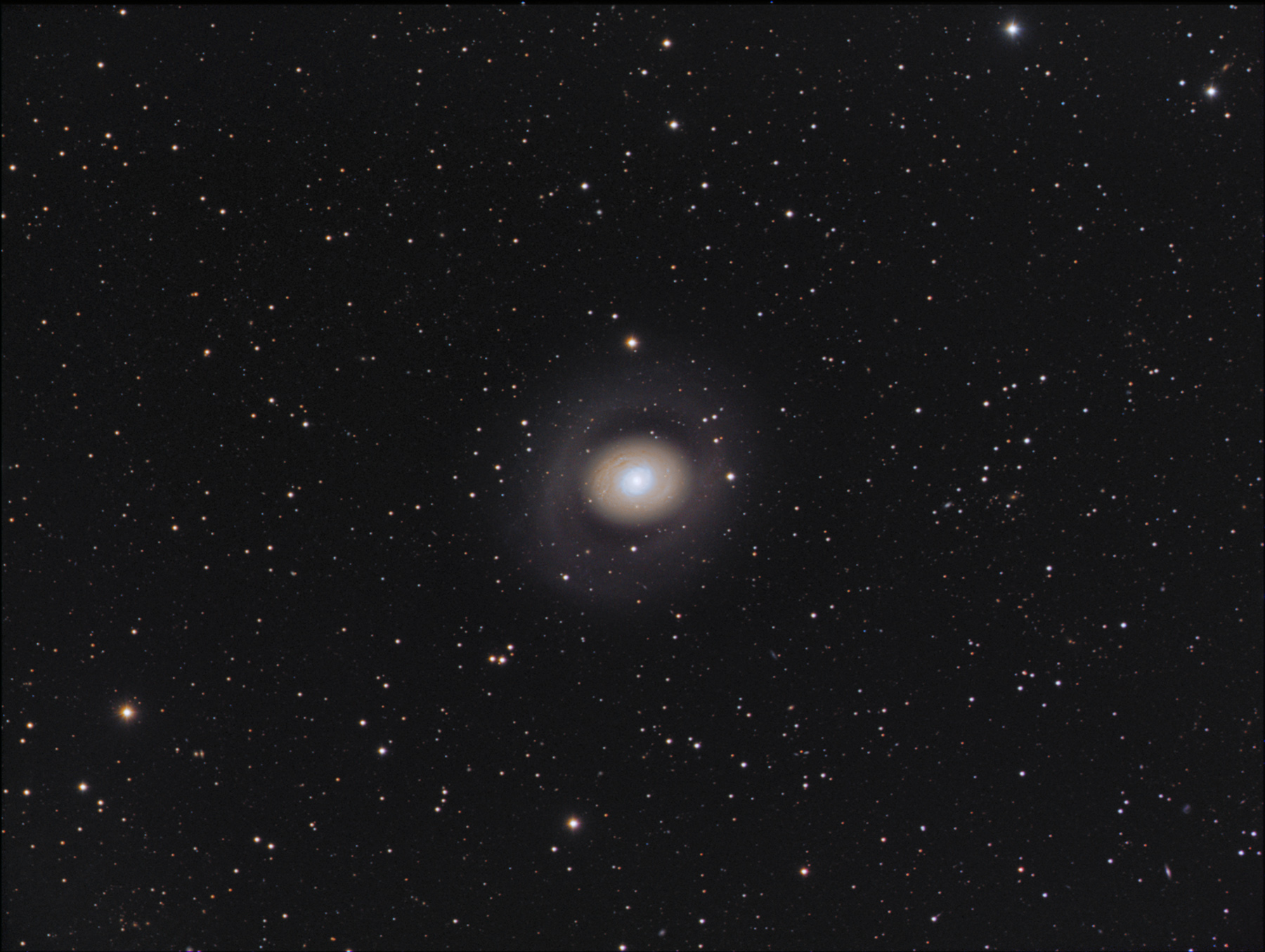
M94—a strange looking galaxy


By Steve Crouch:

I’ve had this data for M94 hanging around a while and wasn’t going to process it because I thought it was pretty poor quality. Anyway I employed the usual astrophotographic data manipulation techniques and came up with something that didn’t look too bad although it would have benefited from a lot more data. Of course you have to remember that this is only a small telescope.

This could be one of the last images from the Arizona telescope as my access is very infrequent now. I can’t complain though because I’ve had a good run.